Megan Returns to Kamal and Confesses Libby’s Death
The Girl on the TrainMegan Hipwell’s confession to Dr Kamal Abdic turns the death of her infant daughter, Libby, from an unspoken private burden into a story another person can witness. Told in two stages, it links Megan’s teenage pregnancy and Libby’s accidental death to the secrecy, fear, and flight that followed, while showing how the recovery of the child’s remains prompts Megan to return to the memory she has spent years trying not to face.
The Return to Kamal
Megan seeks Kamal after their therapeutic relationship has become emotionally complicated and he has rejected her advance. She remembers that speaking with him had helped and that she had felt happier, but now regrets her own response to rejection. What she wants is not to resume the earlier intimacy; she wants to reach the end of a story she has never been able to tell. Keeping it inside, she fears, will make its burden grow. She decides to accept the shame she feels and make Kamal listen.
The visit is undertaken in secret. Scott believes Megan is at the cinema with Tara, while Megan waits outside Kamal’s flat for fifteen minutes, trying to prepare herself to knock. She dresses plainly, in jeans and a T-shirt, with little makeup, intending to make clear that she has not come to seduce him. When he does not answer the first ring, she rings again and then a third time. Her determination carries her past the fear that he may refuse to see her.
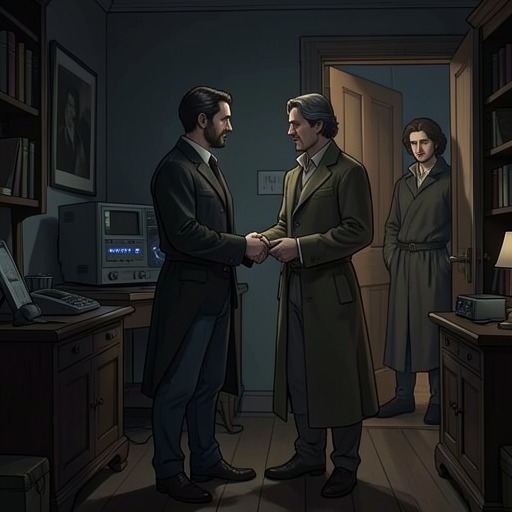
Megan asks Kamal to hear her out and makes clear that she cannot tell her husband. She fears that if he knew, he would no longer see her as the person he thinks he knows, and she cannot imagine being forgiven. She asks Kamal to listen as a friend, not as a therapist. He turns away at first, but then takes two tumblers from a cupboard and offers her wine. That small change permits the conversation to continue outside the formal shape of their sessions, even as their history makes the boundary between friendship and therapy charged.
The Story Megan Reveals
Megan begins with the circumstances of her first relationship with Mac. She was seventeen, had left her parents’ home, and was trying to get away from a place filled with reminders of her dead brother. She describes the relationship as something she needed in the moment, not as a future she expected to last. Then she tells Kamal that she became pregnant. She had not realized in time that she could end the pregnancy, and she remembers that neither she nor Mac wanted the child. Her account presents the pregnancy not as a planned beginning but as something the young couple failed to confront while continuing their lives as before.
Megan recalls that they did not seek medical care or make the preparations associated with pregnancy. As time passed, her body changed and both she and Mac became tired and irritable, but they did not acknowledge what was happening until the baby arrived. In speaking to Kamal, she moves through the difference between knowing the facts and having ever faced them: the story has been withheld for so long that naming its beginning is itself a difficult step.
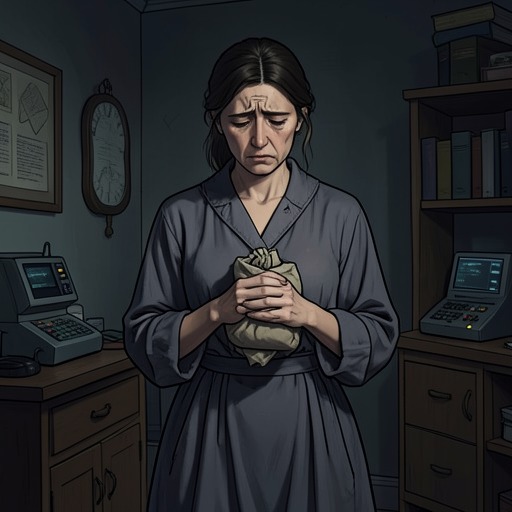
The central memory concerns a cold, stormy period when Mac had gone away and Megan was alone with Libby, then only a few months old. The roof leaked, and Megan remembers trying to keep a fire alight and drinking in an effort to warm herself. She took Libby into the bath and fell asleep. When she woke, she found that the baby had died in the water. Megan can state what happened, but at first cannot continue beyond that point. The confession’s pauses mark how the memory resists becoming a continuous account.
Kamal does not press her to move faster. He gets a sheet of kitchen roll for her, then sits with his hands folded and his attention on her, in the patient stillness she remembers from their sessions. Megan’s legs tremble; she gets up and walks between the kitchen and the room, scratching her palms. These movements make visible the strain of recounting what she has kept silent. When she finally says that she fell asleep, Kamal puts an arm around her. His response leaves her feeling that she has done the right thing and that he does not regard her as a monster.
Burial, Flight, and the Return of Memory
The telling is interrupted by Megan’s ringing phone. Scott is trying to reach her, and Tara calls moments later. The first disclosure has opened the subject without completing it. Later, after police find a child’s remains buried in the grounds of a farmhouse near the East Anglian coast, the news gives Megan’s buried history an immediate public consequence. The report says police were investigating the child’s death after receiving a tip during their investigation into Megan’s own death; it also identifies Holkham as the area where the remains were found. Megan contacts Scott after seeing the news, leaves an apology when he does not answer, and receives a return call that afternoon.
Megan subsequently resumes telling Kamal what happened after Libby died. She remembers Mac coming home and calling for her, then finding her in the bathroom with the baby. Megan says she screamed at him to turn on no light, handed Libby to him, and ran from the house into the rain. She remembers reaching the dunes and thinking about going into the water, but being too frightened. Mac eventually found her and took her home. Her recollection remains uncertain in places: she cannot say exactly what happened in the intervening moments, and the narrative preserves those gaps rather than supplying a complete account.
The next morning, Megan wrapped Libby in a sheet and Mac dug a grave at the edge of the property, near a disused railway line. They covered the grave with stones, but did not speak about the child or look at one another. That night Mac said he had to meet someone and left. Megan feared that he might be going to the police, but he never returned. She remained alone in the house for about ten days, frightened to sleep and haunted by the memory of Libby, before leaving when there was no food left.
What the Confession Changes
Megan’s account makes clear that the burial was followed not by resolution but by prolonged isolation. She describes moving through the dark rooms, hearing or imagining signs of Libby, and believing that she might die there. Her eventual departure was a retreat from a place where she felt unable to remain, not evidence that the loss had ceased to matter. The fear and insomnia she connects to that period explain why the memory has persisted as something she dreads at night.
The discovery near Holkham reverses the concealment that had governed the story: what Megan and Mac buried is found, and the investigation into Megan’s death uncovers the child’s remains as well. Kamal’s listening gives Megan a different kind of response from the silence she shared with Mac. Her telling does not undo Libby’s death or erase her uncertainty about every detail, but it changes the secret from a solitary burden into a disclosed history. The scene’s movement is therefore from refusal and shame toward testimony—not a claim that grief is finished, but the first sustained act of making its cause speakable.